




Retail in 2026 is largely self-guided. Shoppers browse with fewer staff around, scroll past most adverts and decide within seconds which doors to walk through. The storefront sign now carries more of the first impression than it used to.
Why flat signs struggle
A flat board competes with every other flat board on the street. A 3D sign boards dubai adds depth, shadow and material, so it stands out from the same distance. That is why signage companies in Dubai are steering more retail clients towards it.
Five Reasons 3D Signage Suits Retail Branding
1. It draws the eye before shoppers decide to look
Depth changes how light falls on a sign, and shadows shift as the day goes on. The eye picks up that movement without effort, which flat boards cannot offer. A shopper is therefore more likely to notice a store with 3D signage and walk in.
2. It works as a silent salesperson
With fewer staff on the floor, the sign often does the first job of selling. Material and lighting suggest whether a shop is premium or affordable before the customer reaches the door. A signage company can match those cues to the brand so the right expectation is set.
3. It improves brand recall
Distinctive physical objects tend to be remembered more easily than flat images, partly because depth and texture engage more than sight alone. Few people recall a logo they scrolled past online, yet many can describe a storefront sign they saw years ago.
4. It photographs well
Shoppers photograph storefronts, and brands want those photos shared. A 3D sign casts strong shadows and looks substantial on camera, so it shows up well in reels, shorts and stories. Customers end up promoting the brand for free, and the sign works offline and online.
5. Smart features extend its usefulness
Modern 3D signs can include:
- Smart LEDs that adjust brightness to the time of day, change colour for campaigns and reduce energy use.
- AR links that let shoppers scan the sign for offers, animations or virtual try-ons.
- Modular parts that can be swapped individually, so a campaign update does not need a new board.
Real 3D Sign Examples for Retail
Acrylic lettering
Layered acrylic letters on a painted or timber backdrop suit boutiques and beauty stores. The material takes colour well and cuts cleanly into detailed logos. In Dubai’s sun, UV-stable grades matter for outdoor use, as cheaper sheets can fade.
Stainless steel letters
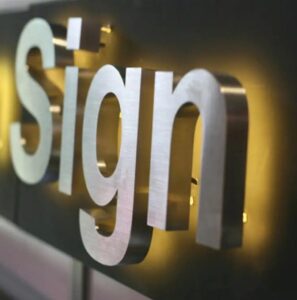
Brushed or mirror-polished stainless steel suits jewellery, fashion and electronics retailers that want a premium look. It resists corrosion and holds its finish in hot, humid conditions, which makes it a common choice for exterior fascias.
LED-backlit signs
Halo-lit letters throw light onto the wall behind them for a floating effect, while face-lit letters glow from the front. Both stay readable after dark, which helps mall and street frontages during evening trade. This comparison of 3D sign boards dubai covers the choice in more detail.
Retail Use Cases and Cost Factors
Where retailers use 3D signs
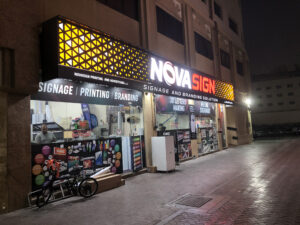
Common placements are the main fascia, mall unit frontages, feature walls behind the till and entrance signs in larger stores. Small shops benefit too, since even simple 3D lettering lifts a modest frontage.
What affects the cost
Price depends mainly on:
- Material, as acrylic, stainless steel and composites are priced differently
- Size and letter depth
- Lighting type and electrical work
- Finish and artwork complexity
- Installation height, access and site conditions
Approvals also add time, since landlords and municipal authorities usually need to sign off on exterior signs in Dubai. A reliable quote needs the artwork and site photos, so be wary of any fixed price given without them.
Why the upfront cost can pay off
Unlike paid ads, a sign carries no bidding, no per-click charge and no algorithm to depend on. LED versions use some electricity, but the sign is bought once and works around the clock.
Conclusion
A 3D sign gives a retail brand a visible, lasting identity at the point where shoppers decide whether to go in. A flat sign can look interchangeable, while a well-made 3D one looks specific to the business. Whether it suits a particular store depends on budget, location and brand, but for retailers competing on first impressions it is a sound investment.
Frequently Asked Questions
1. Are 3D sign boards expensive?
They cost more upfront than flat boards. They also tend to last longer and carry no ongoing media fees, so the gap often narrows over time.
2. How long do 3D sign boards last?
Typically 5 to 15 years, depending on material quality, lighting and exposure to sun and humidity.
3. Which materials are commonly used?
Acrylic, stainless steel, PVC, wood and LED-lit composites are the usual choices.
4. Are 3D sign boards suitable for small shops?
Yes. Even minimal 3D lettering can raise how a small store is perceived.
5. Can 3D sign boards be customised?
Yes. Size, colour, font, lighting and material can all be tailored to the brand.