




Dubai’s streets are crowded with bold visuals, from towering billboards to LED-clad facades. A sign that carries its own light stays readable after dark and holds its own against daytime glare, which is why backlit signage is so common on shopfronts and showrooms. Choosing the right signage for company premises helps businesses improve visibility and create a professional brand presence. This guide compares the main types, the materials behind them and where each one works best. If you are weighing backlit against dimensional signs, this comparison of 3D sign boards and backlit signage may help.
What backlit signage means
In a backlit sign, LED modules sit behind or inside the sign, so the light passes through a translucent face or spills onto the wall behind. Which version suits you depends on the surface, the viewing distance and the look you want.
Types of Backlit Signage
LED lightbox signs
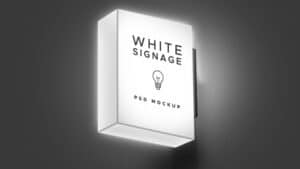
A lightbox is a frame with a translucent face and LEDs inside, which spreads even light across the whole surface. It suits malls, showrooms and street-facing stores where a large printed face needs to be read quickly. Modern LEDs draw less power than older fluorescent tubes.
Illuminated channel letters
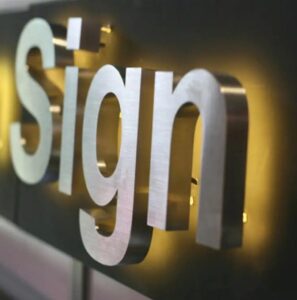
Channel letters are individually formed 3D letters with LEDs built into the body. Face-lit letters glow from the front, while halo-lit letters throw light onto the wall behind for a softer, floating look. Both work well for brand names, logos and monograms.
LED neon-style signs
Flexible LED tubing is shaped into custom lettering and motifs, giving the look of neon without glass tubes. It is lighter and tougher than glass, and suits cafes, salons and feature walls. For outdoor use, check that the product is rated for weather exposure.
Edge-lit acrylic signs
LED strips along the edges of a clear acrylic panel light the engraved or etched design. The glow is subtle with little glare, which suits modern interiors. Strictly speaking, it is lit from the edge rather than from behind.
Where Each Type Works Best
Reception and indoor spaces
Halo-lit letters on a reception wall give a premium look without exposing the light source. Edge-lit acrylic suits meeting-room entrances and quieter lobbies, where a bright sign would feel harsh. A professional signage company in Dubai can help businesses choose suitable lighting and materials for their reception areas. More options are covered on the reception signage page.
Shopfronts and street frontages
Lightboxes and face-lit channel letters give the strongest daytime presence. They suit retail units in malls and on busy streets, where passers-by need the brand name at a glance. LED neon-style signs add personality where the frontage is smaller.
Outdoor and roadside signage
Outdoor signage faces sun, dust, humidity and the occasional rain. Large aluminium lightboxes and channel letters are the usual choices. Check the sign’s IP rating, use a qualified installer for the electrical work and confirm landlord and municipal approvals before fabrication.
Material Options
Face and letter materials
Acrylic gives clear, even light diffusion and is the standard for channel letters and illuminated logos. Polycarbonate is more impact resistant, which helps in busy or vehicle-exposed positions, but it should be UV-stabilised for outdoor use or it can yellow in strong sun.
Frames and trims
Aluminium composite panels are light and corrosion resistant, which suits large lightbox frames. Stainless steel is often used for bezels and trims where a premium finish is wanted.
Design Tips for Effective Backlit Signs
Readability and artwork
Use large, clean fonts with strong contrast, especially for drivers who have only seconds to read a sign. Supply logos as vector files so that cutting and printing stay sharp.
Brightness and brand consistency
Too much light causes glare and too little loses impact, so have brightness set for the specific site. Keep fonts, colours and logo consistent with the rest of your branding.
Conclusion
Backlit signage works best when the type fits the location. A lightbox suits a busy frontage, while halo-lit letters suit a reception wall. Matching the sign to the site, the material and the brand is what makes it effective. Nova Sign can survey the location and advise on the options before fabrication starts.
Frequently Asked Questions
1. Is backlit signage expensive?
It costs more upfront than unlit signs, and the price depends on type, size, materials and installation. A lit sign also stays visible after dark, which an unlit one does not.
2. Does backlit signage use a lot of electricity?
LED systems use less power than older lighting such as fluorescent tubes, but they still draw electricity. Running costs depend on the size, brightness and hours of use.
3. Is backlit signage suitable for outdoor use?
Yes, if it is built for it. Look for weather-resistant materials, a suitable IP rating and UV-stable faces.
4. How long does backlit signage last?
Often up to around 10 years with proper maintenance, depending on LED quality, materials and exposure.
5. Is professional installation required?
Yes, particularly for outdoor and high-mounted signs, where electrical safety, fixing and approvals matter.