




Visitors form a view of an office before anyone speaks to them. The signage is what they read first, and it also has practical work to do: it tells people where to go, keeps exits visible and meets building rules. This post covers that practical side. For the design side, see how professional design shapes first impressions.
What counts as office signage
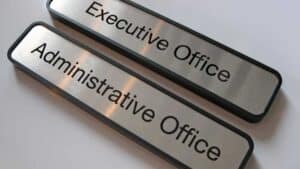
The term covers the company sign board outside, reception signs, door and room signs, directional signs and safety signs. Each has a different job and sits at a different height, so planning signage for office areas individually helps create a clear, organized and professional workspace. This also helps ensure that every sign serves its purpose effectively. Office signage should be planned area by area to guide employees and visitors.
Reception and Entrance Signage
The company sign board
Outside, the sign confirms that a visitor has reached the right building. It should be readable from the approach, lit for evening visits and fixed in a spot the landlord has approved. In multi-tenant buildings, check what the management allows before choosing a size.
The reception wall and desk
Inside, the reception wall usually carries the logo and company name, and it should be visible from the door. Keep it clear of glare from windows and spotlights. A small check-in sign at the desk saves staff from answering the same question all day.
Wayfinding Inside the Office
Directional and room signs
Directional signs belong at decision points such as lift lobbies, corridor junctions and the top of stairs. Door signs should name the room or department exactly as your visitor emails and booking systems do. Consistent fonts and icons let people read the whole system without thinking about it.
Placement heights
Heights vary by sign type and building. A common rule is to fix door and room signs with their centre about 1.5 m from the floor, beside the door handle, so a person can find them without opening the door. Tactile and braille signs need to sit within easy reach. Overhead directional signs should clear head height, with the underside at least 2 m above the floor. Dubai’s Universal Design Code covers contrast, lettering and braille on signs, so confirm exact figures against it and the building’s fit-out guidelines before fabrication.
Safety and Compliance Signage
Exit and emergency signs
Exit signs go above each exit door, with directional signs marking the route. They should be lit while the building is occupied, with photoluminescent markings to guide people if power fails. Civil Defence guidance says exit and directional signs should be installed by approved contractors under an approved consultant, and checked every 30 days for damage and working illumination. Confirm the requirements for your building with the landlord or consultant.
Accessibility and other safety signs
Extinguisher points, first aid stations, assembly points and restricted areas also need clear wording and standard symbols. Accessible routes and restrooms should use high-contrast lettering, with braille where required.
Office Signage Checklist by Area
Entrance and reception
- Company sign board approved by the landlord and readable from the approach
- Logo wall visible from the door and free of glare
- Check-in sign at the desk
- Accessible entrance clearly marked
Corridors and workspaces
- Directional signs at every junction and lift lobby
- Department and room signs that match internal names
- Exit and directional signs lit and unobstructed
- Extinguisher and first aid signs at each point
Meeting rooms, restrooms and stairs
- Room names readable from the corridor
- Restroom signs with symbols and braille where required
- Floor numbers visible on every stair landing
- Evacuation plan displayed near each exit route
Conclusion
Office signage has practical jobs to do before it does branding ones. Reception signs orient visitors, directional signs keep them moving and safety signs have to work on the day something goes wrong. Planning by area, with heights and approvals settled early, avoids costly changes after installation. If you need a signage company in Dubai to survey the space and handle approvals, Nova Sign works on signage for office buildings across the city.
Frequently Asked Questions
1. What types of signage for office spaces are needed?
Most offices need a company sign board, reception signs, door and room signs, directional signs and safety signs.
2. At what height should office door signs be fixed?
A common approach is to centre them about 1.5 m from the floor, beside the door handle. Tactile signs must be within easy reach, and exact requirements depend on the building.
3. Who can install fire exit signs?
Civil Defence guidance says approved contractors working under an approved consultant. Check with building management before ordering.
4. How often should office signage be updated?
Update it when your brand or layout changes, or when signs become faded or damaged. Exit signs should be checked every 30 days.
5. Is signage for office spaces expensive?
Cost depends on size, material, lighting and installation. A site survey is the only way to get an accurate quote.